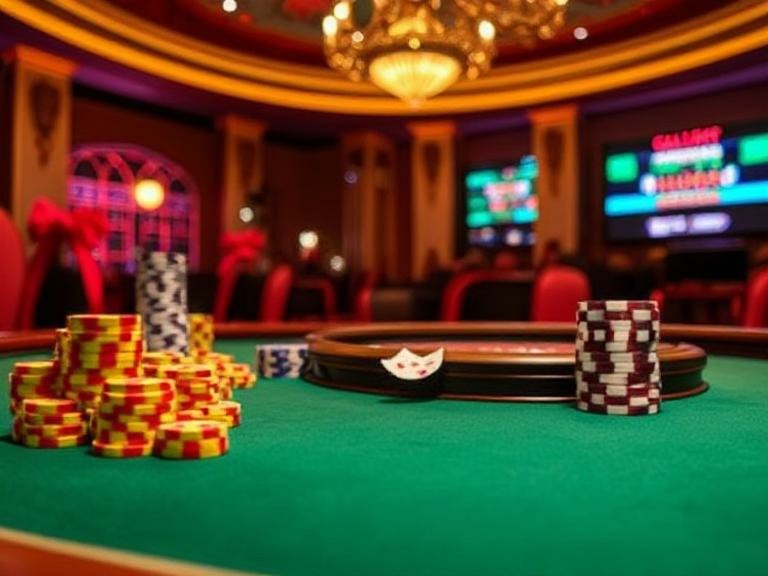
In standard blackjack, one dealer card stays hidden. In Double Exposure Blackjack at bdg33, both dealer cards are dealt face up from the start. You see everything before you make a single decision. That changes the whole game — and if you know how to use that information, it gives you a real edge.
Double Exposure Blackjack is a variant of standard blackjack where the dealer's two initial cards are both dealt face up — fully visible to the player before any decisions are made. In regular blackjack, you only see one dealer card and have to guess what the hidden card might be. Here, there's no guessing. You know exactly what the dealer is holding, and you make your hit, stand, double, or split decision with complete information about the dealer's starting hand.
That sounds like a massive advantage for the player — and in terms of information, it is. But the game balances this by adjusting a few rules. Ties go to the dealer rather than resulting in a push, and blackjack pays even money rather than the standard 3:2. These adjustments bring the house edge back to a reasonable level while still leaving the player with significantly more decision-making power than in standard blackjack.
At bdg33, Double Exposure Blackjack is available as a digital table game with clean, fast gameplay. The interface shows both dealer cards clearly from the moment the hand is dealt, and the decision controls — hit, stand, double, split — are straightforward and responsive. The game uses eight decks, and the dealer stands on soft 17, which is a player-friendly rule that keeps the RTP high when you play with correct strategy.
The theoretical RTP of Double Exposure Blackjack at bdg33 reaches 99.3% when you play with optimal strategy. That's one of the highest return rates available across the entire bdg33 game library. The key word is "optimal" — the game rewards players who understand basic strategy and apply it consistently. If you play by gut feeling, the visible dealer cards don't help you as much as they should.
The core rules that make this variant different from standard blackjack.
The dealer's two starting cards are both dealt face up before you make any decision. You have full visibility of the dealer's hand from the very beginning of every round.
In standard blackjack, a tie results in a push and you get your bet back. In Double Exposure at bdg33, ties are won by the dealer — except for a tied blackjack, which is a push.
A natural blackjack pays 1:1 rather than the standard 3:2. This is one of the main trade-offs for seeing both dealer cards. A tied blackjack is the one exception where the player pushes.
The dealer at bdg33 stands on all 17s, including soft 17 (Ace + 6). This is a player-friendly rule that reduces the dealer's ability to improve a borderline hand.
You can double down, but only on hard totals of 9, 10, or 11. This is more restricted than standard blackjack, where doubling is typically allowed on any two cards.
Pairs can be split once. You cannot re-split after the initial split. Aces can be split, but you only receive one additional card on each split ace — no further hitting allowed.
The game uses eight standard 52-card decks shuffled together. The multi-deck format is standard for this variant and is factored into the strategy adjustments you'll need to make.
Insurance and surrender options are not available in Double Exposure Blackjack at bdg33. Since both dealer cards are visible, insurance would be redundant anyway.
Understanding the differences between Double Exposure and standard blackjack helps you adjust your strategy correctly. The two games look similar on the surface but play quite differently once you account for the rule changes.
The biggest practical difference is how you handle ties. In standard blackjack, a tie is a neutral outcome — you don't win, but you don't lose either. In Double Exposure at bdg33, a tie is a loss. That single rule change has a significant impact on how you should play certain hands, particularly when you're close to the dealer's total and considering whether to take another card.
You gain full information about the dealer's hand. You give up the push on ties and the 3:2 blackjack bonus. If you use the information well, the net result is a game with one of the highest RTPs at bdg33.
Because you can see both dealer cards, the strategy for Double Exposure differs from standard blackjack. The table below covers the most common player hand totals against typical dealer totals. Use this as a starting reference when you play at bdg33.
* This is a simplified reference guide. Full optimal strategy charts for Double Exposure Blackjack are more detailed. Always check the specific rules at bdg33 before applying any strategy.
In standard blackjack, some decisions are forced by uncertainty. In Double Exposure at bdg33, every decision is made with full information. That means every mistake is a mistake you could have avoided — and every correct play is a play you made with clear eyes. Strategy has a bigger impact on your results here than in almost any other card game at bdg33.
From account setup to your first hand — here's how it works.
Sign up at bdg33 with your phone number and a password. The registration process takes under two minutes. If you already have an account, just log in — Double Exposure Blackjack is available immediately in the game lobby.
Add funds to your bdg33 account using your preferred local payment method. Deposits are processed instantly. The minimum deposit is low enough that you can start playing Double Exposure Blackjack without a large upfront commitment.
Find the game in the bdg33 table games section. It loads directly in your browser — no download needed. The interface is clean and works well on both mobile and desktop screens.
Select your chip value and click the betting area to place your wager. The minimum bet at bdg33 is ৳20 per hand. You can adjust your bet between hands — there's no requirement to keep the same stake throughout your session.
Once the deal is complete, both your cards and both dealer cards are face up on the table. Review the dealer's total, compare it to your hand, and choose your action — hit, stand, double, or split — based on what you can see.
Winning hands are paid out immediately to your bdg33 balance. Withdraw to bKash or Nagad whenever you're ready — transfers typically complete within minutes. There's no lock-in period on winnings from table games at bdg33.
Seeing both dealer cards is only useful if you know what to do with that information. These tips will help you get more out of every session at bdg33.
Because ties lose in Double Exposure, you need to beat the dealer — not just match them. If the dealer shows 17, standing on your own 17 is a losing play in the long run. You need to hit and try to reach 18 or higher, even though that risks busting. This is the biggest strategic shift from standard blackjack.
When the dealer shows a stiff hand — a total of 12 through 16 — and you hold 9, 10, or 11, doubling down is almost always the right move at bdg33. You know the dealer is in trouble, and doubling maximises your return in a situation where you have a clear advantage.
A natural blackjack pays 1:1 here, not 3:2. That's a meaningful reduction in value. Don't adjust your strategy to try to land blackjacks more often — the game doesn't reward that approach. Focus on making correct decisions on every hand rather than hoping for naturals.
Double Exposure strategy is different enough from standard blackjack that it's worth keeping a reference chart open when you first start playing at bdg33. The game is not timed — you can take as long as you need to make each decision. Use that time to make the right call rather than guessing.
Even with a 99.3% RTP, variance means individual sessions can swing significantly. Decide on a session budget before you open the game at bdg33, and stick to it. The high RTP works in your favour over many hands — not necessarily within a single short session.
Common questions about Double Exposure Blackjack at bdg33.